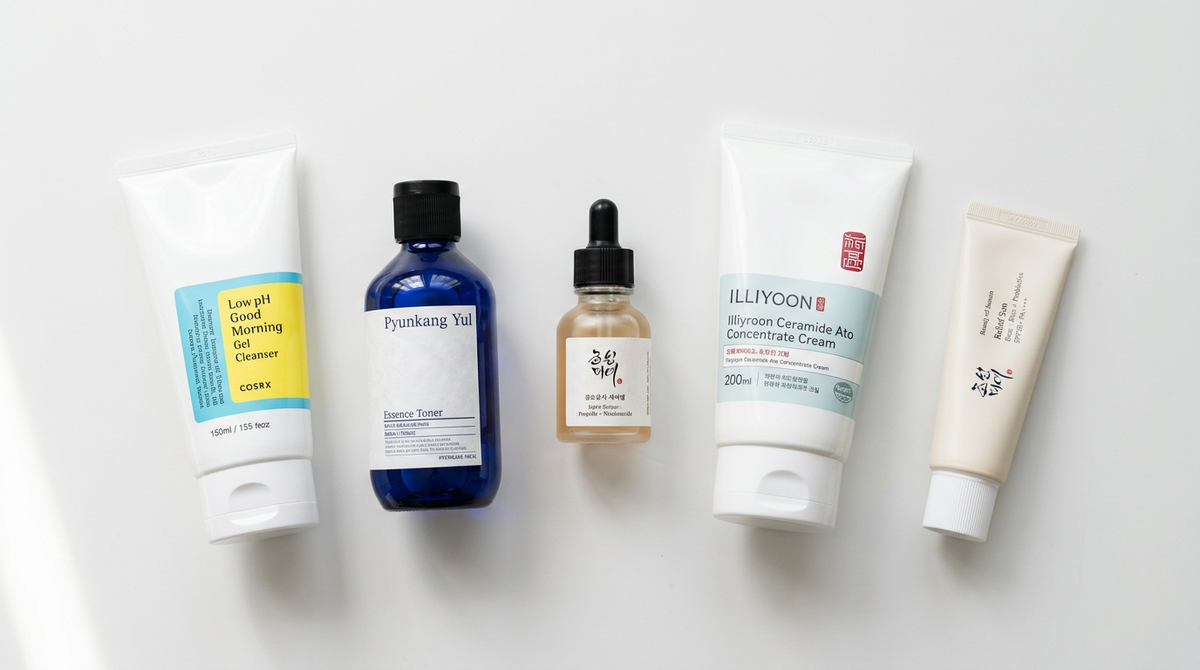
New to Korean skincare? You don't need a complicated 10-step routine to get started. The best skincare routine is one that suits your skin, fits your lifestyle, and is easy to follow consistently.
From gentle cleansers to hydrating serums and lightweight sunscreens, Korean beauty offers a thoughtful approach to everyday skincare. In this beginner-friendly guide, we'll explain the essential steps, how to layer your products, and how to create a simple morning and evening routine.
What Is a Korean Skincare Routine?
A Korean skincare routine is an approach to daily skincare that often emphasizes gentle cleansing, hydration, maintaining the skin barrier, and protecting the skin from sun exposure.
One of the most recognizable aspects of K-beauty is the use of lightweight, layered products such as toners, essences, and serums. However, using more products does not necessarily produce better results.
The foundation of a good routine is simple: cleanse gently, moisturize appropriately, and protect your skin from the sun.
Do You Really Need a 10-Step Korean Skincare Routine?
The famous Korean 10-step skincare routine has introduced millions of people to K-beauty. A traditional version includes:
- Oil-based cleanser
- Water-based cleanser
- Exfoliator
- Toner
- Essence
- Serum or ampoule
- Sheet mask
- Eye cream
- Moisturizer
- Sunscreen (during the day)
But here's something every beginner should know: you do not need to complete all 10 steps every day.
Many of these products are optional, and some treatments are suitable only for occasional use. Using too many new products at once can also increase the likelihood of irritation.
Instead, begin with three essentials:
- Gentle cleanser: Removes dirt, excess oil, and daily impurities.
- Moisturizer: Helps maintain hydration and supports the skin barrier.
- Broad-spectrum sunscreen SPF 30+: Protects against harmful UV exposure during the day.
Once you have established these basics, you can gradually explore additional skincare products.
The Essential Korean Skincare Steps Explained
Step 1: Cleanser — Start With a Fresh Canvas
Cleansing helps remove makeup, excess oil, sunscreen, dirt, and other impurities that accumulate throughout the day.
Korean skincare commonly features two types of cleansers:
- Oil-based cleansers: Often used to dissolve makeup and water-resistant sunscreen.
- Water-based cleansers: Help remove sweat, dirt, and remaining residue.
Using both products is known as double cleansing. It may be useful for people who regularly wear makeup or water-resistant sunscreen, but it is not required for everyone.
Beginner tip: Your skin should feel comfortable after cleansing, not excessively tight or stripped.
Step 2: Toner — Add Lightweight Hydration
Many modern Korean toners focus on hydration rather than astringency.
Depending on the formula, a toner may contain ingredients such as:
- Hyaluronic acid
- Glycerin
- Panthenol
- Centella asiatica
Hydrating toners can be useful when your skin feels dehydrated, but they are optional. Apply a small amount after cleansing, following the product's instructions.
Step 3: Essence — Discover a K-Beauty Favorite
Essences are lightweight skincare products frequently associated with Korean beauty routines.
They may contain hydrating ingredients, botanical extracts, or other ingredients selected for particular skincare goals.
Essences are generally applied before heavier creams. However, the distinction between an essence and a serum varies between brands.
You don't need both an essence and a serum. Choose the formulation that best fits your needs.
Step 4: Serum — Target Your Skincare Goals
Serums are often formulated with ingredients intended to address specific skincare concerns.
Popular ingredients found in Korean skincare include:
- Niacinamide: Commonly used to support the skin barrier and improve the appearance of uneven tone.
- Hyaluronic Acid: Helps attract and retain moisture.
- Centella Asiatica: Frequently included in formulas designed for skin comfort.
- Ceramides: Help maintain the skin's natural protective barrier.
- Vitamin C: An antioxidant used in formulas targeting uneven-looking skin tone.
For beginners, start with one serum based on your primary skincare goal rather than combining several new active ingredients.
Step 5: Moisturizer — Support Your Skin Barrier
A well-chosen moisturizer helps reduce moisture loss and keeps skin feeling comfortable.
Korean moisturizers are available in different textures, including lightweight gels, emulsions, lotions, and rich creams.
- Dry skin: Consider richer moisturizing creams.
- Oily skin: Look for lightweight, non-comedogenic formulas.
- Combination skin: Consider a balanced lotion or gel-cream.
- Sensitive skin: Explore gentle, fragrance-free options.
Remember that even oily skin can benefit from moisturizer. Choosing a comfortable texture is more important than avoiding moisturizer altogether.
Step 6: Sunscreen — Your Essential Morning Finish
Daily sun protection is one of the most important steps in a daytime skincare routine.
UV exposure can contribute to premature skin aging, uneven pigmentation, and skin damage.
Choose a broad-spectrum sunscreen with SPF 30 or higher, and follow its application instructions.
Apply sunscreen after your other skincare products and before makeup. When outdoors, reapply approximately every two hours and after swimming or sweating, as directed on the product label.
Korean sunscreens are available in a wide range of textures, but sunscreen formulations and regulations differ between markets. Always check the product's labeling and suitability for your location.
Your Simple Morning Korean Skincare Routine
A morning routine does not need to be time-consuming. Start with these basic steps:
- Cleanse: Use a gentle cleanser if needed.
- Hydrate: Apply a toner if desired.
- Treat: Use an optional serum appropriate for daytime use.
- Moisturize: Apply a suitable moisturizer.
- Protect: Finish with broad-spectrum SPF 30+ sunscreen.
If you prefer a minimalist routine, cleanser, moisturizer, and sunscreen are an excellent starting point.
Your Simple Evening Korean Skincare Routine
Your evening routine should focus on removing impurities and maintaining skin comfort.
- Remove makeup and resistant sunscreen: Use an oil cleanser if needed.
- Cleanse: Use a gentle water-based cleanser.
- Hydrate: Apply an optional hydrating toner.
- Treat: Apply a suitable serum or treatment, if desired.
- Moisturize: Finish with a moisturizer.
Double cleansing, exfoliating products, and specialty treatments are not essential for every person or every evening.
How to Choose Korean Skincare for Your Skin Type
Dry Skin
Dry skin often feels tight, rough, or uncomfortable. Look for gentle cleansers and moisturizing formulas containing ingredients such as glycerin, hyaluronic acid, and ceramides.
Oily Skin
Oily skin produces more sebum and may appear shiny throughout the day. Lightweight moisturizers and gentle cleansers can help maintain a comfortable routine without excessive stripping.
Combination Skin
Combination skin may feature an oily forehead, nose, or chin with comparatively drier cheeks. Choose balanced formulations and adjust the amount of moisturizer applied to different areas.
Sensitive Skin
Sensitive skin may react more easily to certain ingredients. Consider gentle, fragrance-free products and introduce new formulas one at a time.
If you experience persistent burning, redness, or irritation, discontinue the suspected product and consult a qualified healthcare professional when appropriate.
Five Common Korean Skincare Mistakes to Avoid
1. Introducing Too Many Products at Once
Adding several unfamiliar products simultaneously makes it harder to identify what is helping your skin or causing a reaction.
2. Believing More Steps Always Mean Better Results
An effective routine does not need to contain every available product category. Each product should serve a clear purpose.
3. Over-Exfoliating
Frequent or aggressive exfoliation can contribute to dryness and irritation. Follow product instructions and consider your skin's tolerance.
4. Skipping Sunscreen
Hydrating serums and moisturizers cannot replace appropriate protection from UV exposure.
5. Following Trends Instead of Your Skin's Needs
Popular products can be interesting to explore, but a trending ingredient isn't automatically right for every skin type.
How to Build Your First Korean Skincare Routine
First, establish the essentials. Find a gentle cleanser, moisturizer, and sunscreen that work comfortably with your skin.
Next, observe how your skin responds. Pay attention to hydration, comfort, dryness, and any signs of irritation.
Finally, introduce optional products gradually. If your basic routine is working well, consider adding a hydrating toner or targeted serum.
There is no universal schedule for introducing new products. Take your time and patch-test products as recommended.
Frequently Asked Questions
How many steps should a beginner Korean skincare routine have?
Three essential steps are enough to begin: gentle cleansing, moisturizing, and daytime sunscreen. Additional products are optional.
Is the 10-step Korean skincare routine necessary?
No. The 10-step routine is a popular framework rather than a requirement. A shorter routine can be easier to maintain.
Should I use toner or serum first?
A lightweight hydrating toner is typically applied before serum. Always follow the directions for your specific products.
Do I need to double cleanse every night?
Not necessarily. Double cleansing may be useful when removing makeup or water-resistant sunscreen, but a single gentle cleanser may be sufficient.
Can oily skin use Korean moisturizers?
Yes. Lightweight, non-comedogenic moisturizers can be suitable for oily skin.
How long does a Korean skincare routine take to work?
Results vary depending on your skin, products, and goals. Some hydration benefits may be noticed relatively quickly, while other changes may take longer.
Can people with sensitive skin use Korean skincare?
Many products may be suitable, but individual reactions vary. Introduce products carefully and seek professional guidance for persistent skin concerns.
Final Thoughts: Great Skin Starts With Good Habits
Korean skincare isn't about owning the largest collection of products or following the most complicated routine.
It's about understanding your skin, choosing appropriate formulas, and establishing daily habits that support skin comfort and protection.
Start with gentle cleansing, consistent moisturizing, and appropriate sun protection. Explore additional products when they serve your needs.
At LUMIHARU, we believe beauty should feel thoughtful, approachable, and personal.
Start simple. Stay consistent. Find your everyday glow.
Explore Korean Beauty at LUMIHARU
Discover Korean skincare essentials, beauty products, and everyday care at LUMIHARU.
Editorial References
- American Academy of Dermatology — Skin Care Product Application Order
- American Academy of Dermatology — How to Test Skin Care Products
- American Academy of Dermatology — How to Select Sunscreen
Editorial note: This article is intended for general educational purposes and does not replace personalized medical advice.