
LUMIHARU JOURNAL·Skincare Guides
How to Choose the Right Korean Sunscreen: A Beginner's Guide
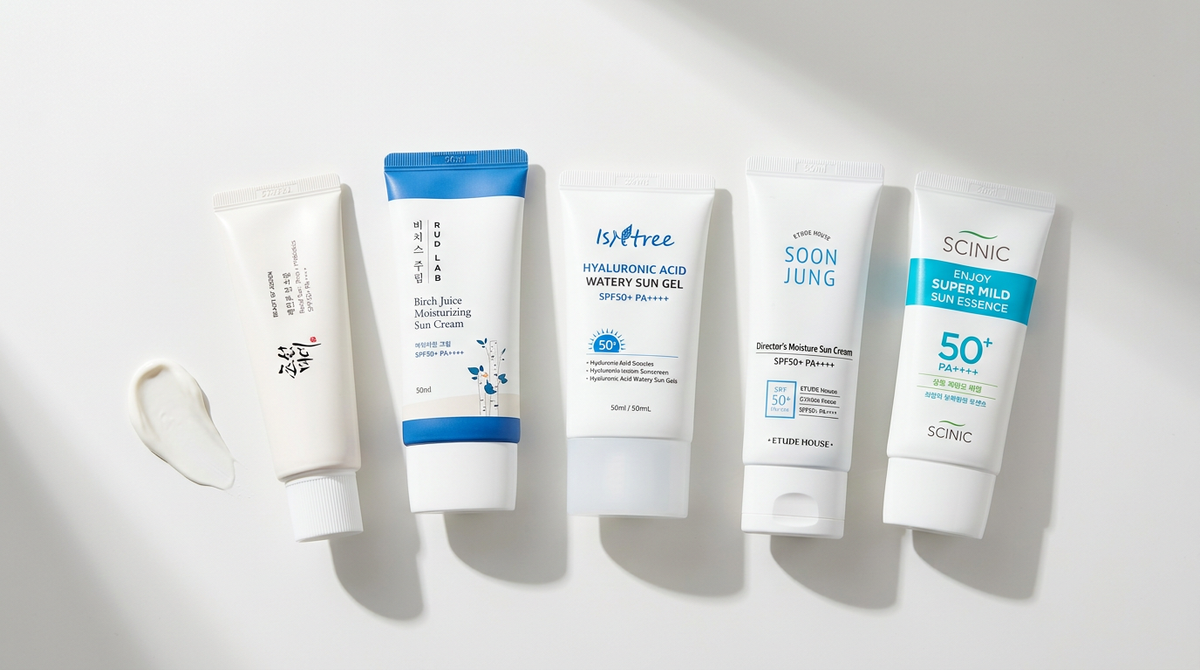
Choosing a Korean sunscreen should not feel complicated. The best formula is one that provides appropriate UV protection, feels comfortable on your skin, and is easy to apply consistently. Whether you prefer a lightweight fluid, a moisturizing cream, or a tone-up finish, this guide explains how to choose wisely.
Why Sunscreen Matters in Your Daily Routine
Ultraviolet (UV) radiation can damage skin even when the weather looks cloudy. UVB contributes to sunburn, while UVA contributes to premature skin aging and can also harm the skin. Broad-spectrum sunscreen is designed to protect against both UVA and UVB.
For everyday use, choose a broad-spectrum sunscreen with SPF 30 or higher. Sunscreen works best as part of a broader sun-protection plan that includes seeking shade, wearing protective clothing, and limiting intense sun exposure.
What Makes Korean Sunscreens Different?
Korean beauty brands are known for offering a variety of sunscreen textures, from watery lotions and light gels to richer creams and makeup-friendly finishes. Many are designed to fit comfortably into a daily skincare routine.
However, a pleasant texture does not replace adequate protection. Always check the packaging for the actual SPF rating, relevant UVA protection labeling, usage instructions, and the market in which the sunscreen is authorized for sale.
How to Read Sunscreen Labels
SPF: What Does the Number Mean?
SPF is a measure related to protection from sunburn-producing UV radiation under standardized testing conditions. SPF 50 offers greater UVB protection than SPF 30, but neither makes your skin immune to sun damage or allows you to stay outdoors indefinitely without reapplying.
Broad Spectrum and UVA Protection
Look for a broad-spectrum claim where available. Some Korean sunscreen packaging also uses a PA rating, such as PA+++ or PA++++, to indicate a level of UVA protection under that labeling system. Standards differ across regions, so do not treat all labels as interchangeable.
Water Resistance
If you plan to swim, sweat, or exercise outdoors, choose a sunscreen specifically labeled water-resistant and follow its stated duration and reapplication instructions. No sunscreen is waterproof. A comfortable everyday facial sunscreen may not be the right product for every outdoor activity.
How to Choose a Korean Sunscreen for Your Skin Type
Dry Skin: Comfortable, Moisturizing Textures
If your skin often feels tight, look for creamy or lotion-like formulations with moisturizing ingredients such as glycerin or hyaluronic acid. You can still apply a separate moisturizer underneath if needed.
Oily Skin: Lightweight Finish
Gel-creams, fluids, and lighter lotions may feel more comfortable for oily skin. The phrase "non-comedogenic" may be useful when comparing formulas, although individual tolerance varies.
Combination Skin: Balance Is Key
Choose a formula that feels comfortable across your face. You may need less moisturizer on oilier areas before applying sunscreen, but sunscreen should still be applied adequately across exposed skin.
Sensitive Skin: Prioritize Tolerance
Consider fragrance-free options and inspect ingredient lists if you know you react to particular components. Patch-test an unfamiliar product before using it broadly. If sunscreens repeatedly cause burning or irritation, ask a dermatologist for guidance.
Mineral vs. Organic UV Filters
Mineral sunscreens typically rely on zinc oxide and/or titanium dioxide. Other sunscreens use approved organic UV filters. Both types can provide effective protection when properly formulated and used according to instructions.
Texture, visible cast, finish, and irritation potential vary by product—not only by filter category. Rather than assuming one category is universally better, choose a properly labeled sunscreen you can use in the right amount.
How Much Sunscreen Should You Apply?
Apply sunscreen generously to all exposed skin, including commonly missed areas such as the ears and neck. The right amount depends on the area being covered and the formulation. Follow product directions rather than relying on a universal number of finger lengths.
Apply before sun exposure as directed, and reapply about every two hours when outdoors, or sooner after swimming, sweating, or towel-drying. Check the label for specific requirements.
Where Sunscreen Fits in a Korean Skincare Routine
- Cleanser: Gently clean your skin as needed.
- Toner or serum (optional): Add a product that suits your skin's needs.
- Moisturizer: Apply if needed for comfort and hydration.
- Sunscreen: Use as the final skincare step before makeup.
Allow products to settle as directed and avoid aggressively rubbing or mixing sunscreen into another product in a way that might interfere with an even layer.
Common Sunscreen Mistakes to Avoid
- Applying too little: The labeled level of protection depends on appropriate use.
- Skipping cloudy days: UV exposure can still occur.
- Forgetting reapplication: One morning application may not be sufficient for extended outdoor exposure.
- Confusing makeup SPF with complete coverage: A foundation's SPF alone may not provide adequate protection if used sparingly.
- Buying by trends alone: Check suitability, labeling, and how the formula works on your skin.
Explore Korean Sunscreen at LUMIHARU
Once you understand your skin's needs and the protection you are looking for, you can compare formulas more confidently. The product selection below, when available, is linked to current products chosen by the LUMIHARU team.
Product availability, prices, and options may vary by market. Always read the sunscreen label and directions before purchasing.
Frequently Asked Questions
Is SPF 50 better than SPF 30?
SPF 50 offers more UVB protection under standardized conditions, but both SPF 30 and SPF 50 require adequate application and reapplication. Choose a broad-spectrum product suited to your needs.
Can I skip moisturizer if my sunscreen feels hydrating?
Some people find a moisturizing sunscreen comfortable enough on its own. Others, especially those with dry skin, prefer a separate moisturizer. Your skin's comfort can guide that decision.
Do I need sunscreen indoors?
It depends on your exposure to daylight and UV sources, including time near windows. If you are uncertain about your situation or have a photosensitive condition, seek personalized professional advice.
Are Korean sunscreens suitable for sensitive skin?
Some may be, but no product is guaranteed to suit all sensitive skin. Look at the complete formula, consider fragrance-free options, and patch-test unfamiliar products.
Can I wear Korean sunscreen under makeup?
Yes, many facial sunscreens are designed to work well under makeup. Allow sunscreen to form an even layer and follow the product's directions. Do not rely on makeup alone for adequate sun protection.
Final Thoughts
There is no single Korean sunscreen that is best for everyone. The right choice combines appropriate UV protection, a texture you enjoy, and consistent use. Start with broad-spectrum SPF 30 or higher, check the label, and build your routine around what your skin actually needs.
Discover more practical K-beauty education in the LUMIHARU Journal.
Editorial References
- American Academy of Dermatology — How to Select a Sunscreen
- American Academy of Dermatology — How to Apply Sunscreen
- U.S. FDA — Ultraviolet (UV) Radiation
This article is for general education and does not replace personalized medical advice.
Share it with someone who loves Korean beauty.
Keep Reading


Find Your Everyday Glow.
Explore Korean skincare, makeup, and beauty essentials at LUMIHARU.
Explore Beauty Essentials →